WeatherTech® Raceway Laguna Seca: Precision, Elevation, and the Famous Corkscrew
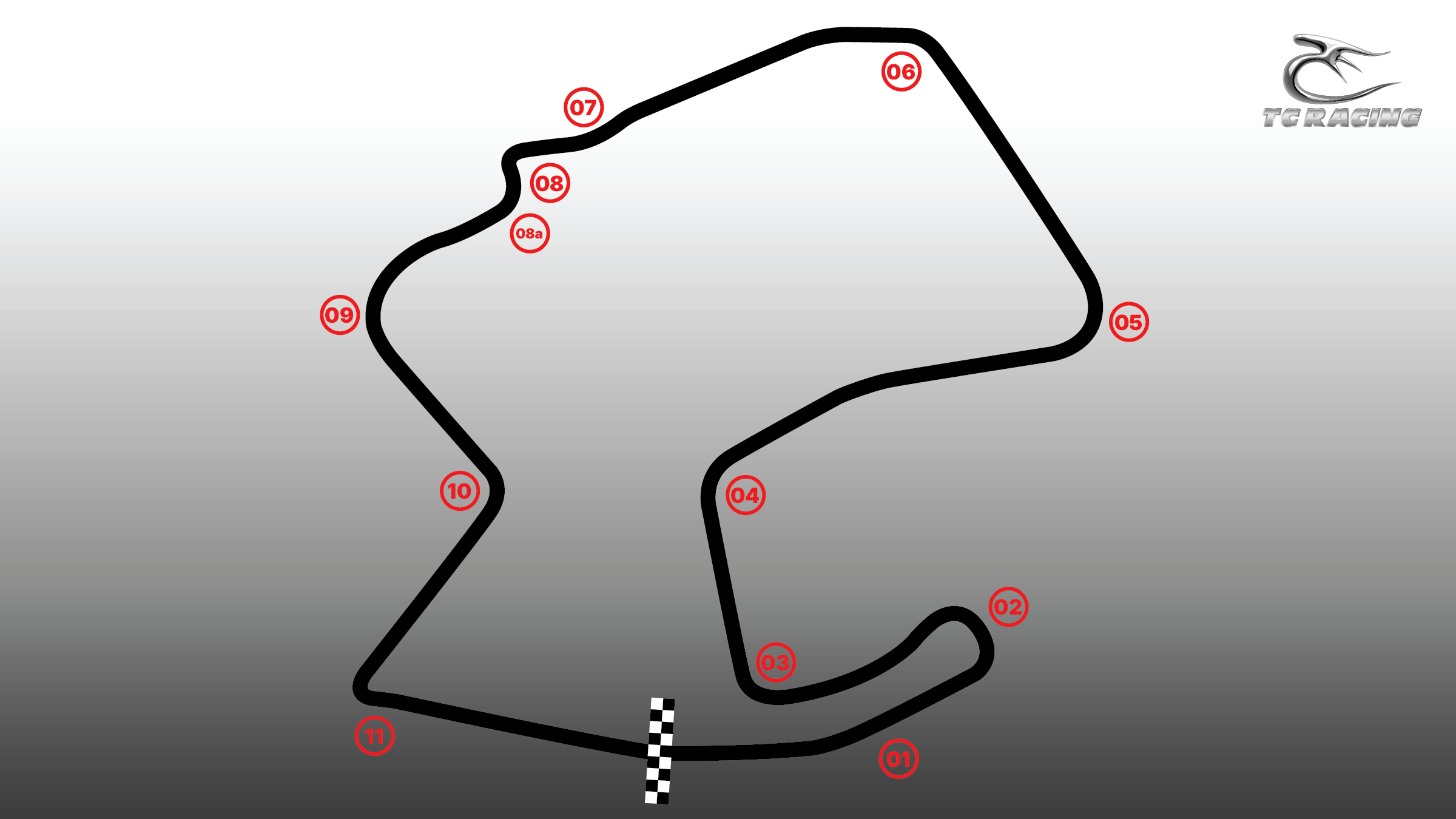
Track Layout and Key Specifications
Laguna Seca is a permanent road course that blends natural terrain with a technical design that challenges both drivers and engineers.
Track Specs:
- Length: 2.238 miles (3.602 km)
- Turns: 11
- Surface: Asphalt
- Elevation Change: Approximately 180 feet
The track’s layout flows through hills, compressions, and elevation drops, requiring drivers to commit to corners they cannot fully see.
Notorious Turns and Signature Sections
Laguna Seca’s reputation is built on several key sections that separate it from nearly every other circuit in the world.
The Corkscrew (Turns 8 & 8A)
This is the corner everyone talks about.
A blind crest leads into a sudden left-right drop with a dramatic elevation change. Drivers crest the hill without seeing the apex, then plunge downhill while turning.
- One of the most famous corners in motorsport
- Requires absolute trust in braking points
- Punishes hesitation or overcommitment
It is less of a turn and more of an experience.
Rainey Curve (Turn 9)
A fast, sweeping left-hander that comes immediately after the Corkscrew.
- High-speed commitment corner
- Minimal margin for correction
- Critical for maintaining lap momentum
Turn 11 Hairpin
The slowest corner on the track and one of the best overtaking opportunities.
- Heavy braking zone
- Tight radius
- Key setup for passing onto the front straight
Drivers often set up moves here after applying pressure through the previous corners.
Front Straight
While not the longest straight in racing, Laguna Seca’s front straight plays an important role:
- Primary overtaking zone
- Leads into Turn 2’s uphill braking section
- Requires strong exit speed from Turn 11
What Makes Laguna Seca Unique?
1. Elevation Changes
Unlike flat circuits, Laguna Seca constantly rises and falls.
Drivers must manage:
- Blind crests
- Downhill braking zones
- Weight transfer through elevation shifts
The track feels alive, constantly changing beneath the car.
2. Limited Runoff Areas
Laguna Seca is not as forgiving as modern circuits.
- Sand traps line key corners
- Mistakes often result in lost time or race-ending damage
- Precision is required on every lap
3. Technical Flow
The track rewards rhythm over aggression.
- Smooth inputs are critical
- Overdriving leads to mistakes
- Consistency beats outright speed
Drivers who find the flow can gain significant advantage over those who fight the car.
IMSA® Racing at Laguna Seca
Each year, Laguna Seca hosts a round of the IMSA WeatherTech® SportsCar Championship, typically held in May.
Event Structure:
- Practice & Qualifying: Leading up to race weekend
- Main Race Duration: Approximately 2 hours and 40 minutes (160 minutes)
This mid-length format blends elements of sprint racing with endurance strategy.
Race Classes Competing
Laguna Seca features multiple IMSA classes competing simultaneously.
Current Classes:
-
GTP (Grand Touring Prototype) The fastest and most advanced cars on track, featuring hybrid systems and cutting-edge aerodynamics.
-
LMP2 (Le Mans Prototype 2) Competitive prototype class with slightly less power than GTP but still highly capable.
-
GTD Pro (Grand Touring Daytona Pro) Professional GT entries from manufacturers like Corvette, Ferrari®, and Porsche®.
-
GTD (Grand Touring Daytona) Mixed driver lineup class featuring both professionals and amateurs.
This multi-class setup creates constant traffic and strategic decision-making throughout the race.
Race Strategy and Challenges
Laguna Seca’s layout directly influences race strategy.
Key Factors:
- Tire Management: Constant elevation and cornering loads stress tires
- Track Position: Passing can be difficult outside key zones
- Traffic Navigation: Multi-class racing requires patience and awareness
Drivers must balance aggression with control, especially when navigating slower traffic through technical sections.
A Driver’s Circuit
Laguna Seca is often described as a “driver’s track.”
Why?
Because it demands:
- Precision braking
- Smooth steering inputs
- Confidence in blind corners
There is little room for error, and no easy laps. Every corner requires attention.
Atmosphere and Fan Experience
Beyond the racing, Laguna Seca offers a unique environment.
- Natural hillside viewing areas
- Close proximity to the track
- Scenic coastal surroundings
Fans can watch cars dive through the Corkscrew or battle into Turn 11 from multiple vantage points, creating an immersive experience.
Final Thoughts
WeatherTech Raceway Laguna Seca stands apart not because of size or speed, but because of character.
It is a circuit defined by:
- Elevation
- Precision
- Iconic corners
From the blind entry of the Corkscrew to the tight Turn 11 hairpin, every section challenges drivers in a different way.
In IMSA competition, it becomes even more demanding. Multiple classes, strategic complexity, and constant traffic turn every lap into a calculated effort.
Because at Laguna Seca, you are not just racing the clock.
You are racing the track itself.
IMSA® trademark is owned by International Motor Sports Association, LLC (LIMITED LIABILITY COMPANY; FLORIDA, USA); WeatherTech® trademark is owned by MacNeil IP, 1 MacNeil Court Bolingbrook ILLINOIS 60440; Ferrari® trademark is owned by Ferrari S.p.A. (JOINT STOCK COMPANY; ITALY); Porsche® trademark is owned by Dr. Ing. h.c.F. Porsche AG. All trademarked names or other marks mentioned are for reference purposes only.