Virginia International Raceway: Precision, Rhythm, and GT Racing Excellence
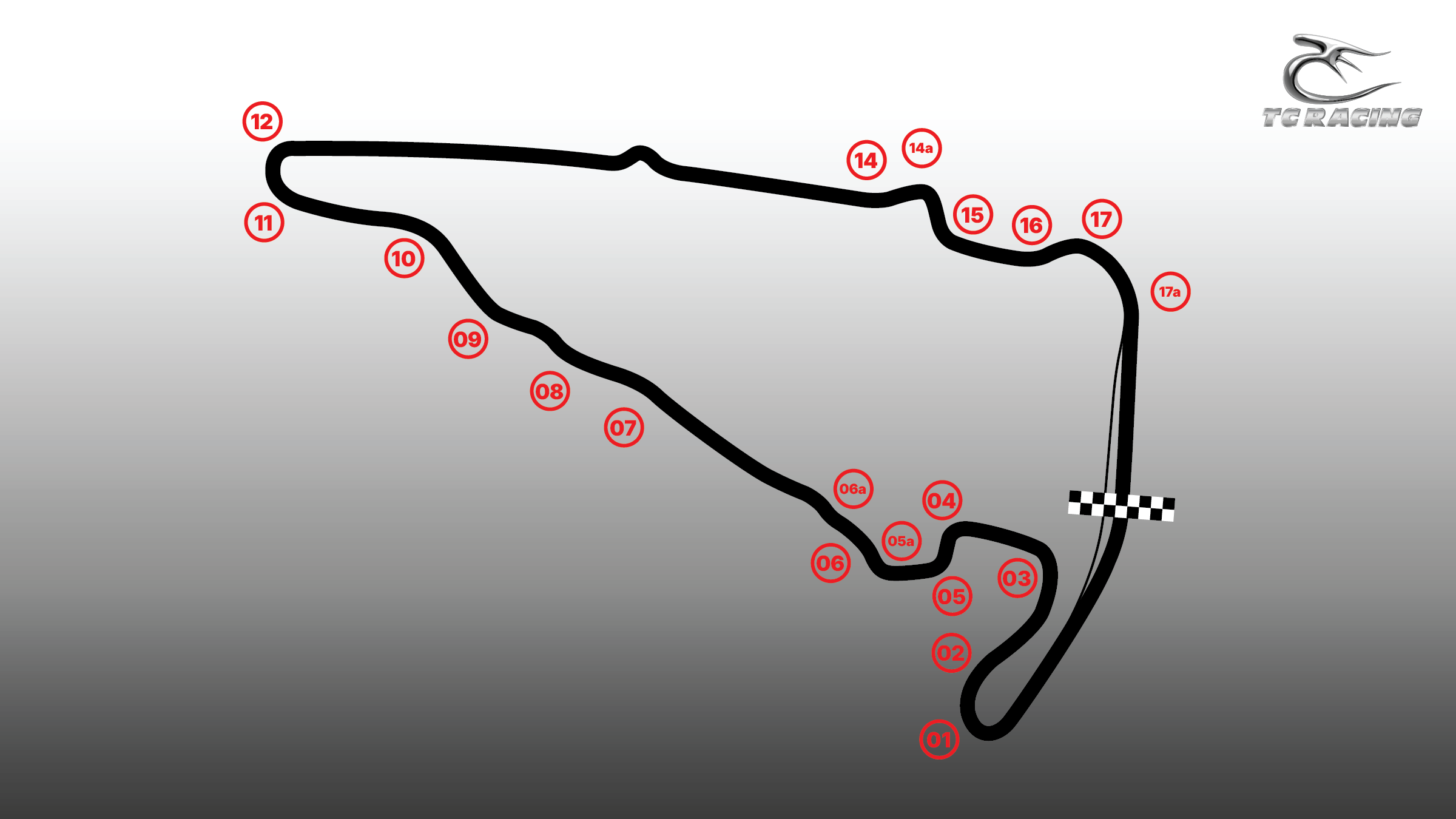
Track Layout and Specifications
Virginia International Raceway is a permanent road course that blends natural terrain with a highly technical design.
Track Specs (Full Course):
- Length: 3.27 miles (5.26 km)
- Turns: 17
- Surface: Asphalt
- Elevation: Significant elevation changes throughout
The track winds through forests and rolling hills, creating a natural rhythm that rewards precision and consistency.
A Full Lap: Corner by Corner Character
VIR is best understood as a sequence of flowing sections rather than isolated corners.
The Esses
One of the most iconic sections of the circuit.
- High-speed left-right transitions
- Requires smooth steering and throttle input
- Minimal margin for correction
Drivers who maintain rhythm here gain significant time.
Oak Tree Corner
Perhaps the most famous turn at VIR.
- Tight, technical corner
- Heavy braking zone
- Critical for exit speed onto the back straight
This corner often determines overtaking opportunities.
Back Straight
One of the fastest sections of the track.
- Allows cars to reach top speeds
- Key overtaking zone
- Leads into heavy braking
Roller Coaster
A dramatic downhill sequence.
- Rapid elevation changes
- Blind entry points
- Tests driver confidence and car stability
Hog Pen
The final corner leading onto the front straight.
- Critical for lap time
- Requires precise throttle control
- Sets up passing opportunities into Turn 1
Race Classes at VIR
Unlike many IMSA® rounds, VIR is unique in that it focuses exclusively on GT classes, creating tighter and more competitive racing.
Classes Competing:
-
GTD Pro (Grand Touring Daytona Pro) Fully professional driver lineups featuring top-tier GT manufacturers such as Corvette, Porsche®, Ferrari®, and Lamborghini®.
-
GTD (Grand Touring Daytona) Mixed driver class combining professional and amateur racers.
Class Specifications
GTD Pro
- Professional drivers only
- Manufacturer-backed teams
- GT3®-spec race cars
- Advanced aerodynamics and performance tuning
GTD
- Combination of pro and amateur drivers
- Same GT3-spec machinery as GTD Pro
- Focus on consistency and strategy
Because both classes use similar cars, the competition is incredibly close, with driver skill often making the difference.
Race Duration and Event Schedule
VIR hosts a sprint-style IMSA race compared to longer endurance rounds.
Race Details:
- Race Duration: Approximately 2 hours and 40 minutes (160 minutes)
- Format: Timed race
- Distance Covered: Varies based on pace and caution periods
Event Timing:
- Typically held in late summer (August)
- Practice and qualifying sessions throughout the weekend
- Main race usually on Sunday
The full event spans three days, providing a complete race weekend for teams and fans.
What Makes VIR Unique?
1. A Pure Driver’s Track
VIR is often described as one of the most driver-focused circuits in North America.
- Emphasis on skill and precision
- Minimal reliance on top speed
- Continuous technical challenge
Drivers must be smooth and consistent to succeed.
2. Flow and Rhythm
Unlike stop-and-go tracks, VIR flows naturally.
- Corners connect seamlessly
- Maintaining rhythm is critical
- Mistakes disrupt entire sections of the lap
This creates a unique driving experience.
3. Elevation Changes
The track’s natural terrain adds complexity.
- Blind crests
- Downhill braking zones
- Constant weight transfer
Drivers must adapt to changing conditions throughout the lap.
4. Narrow Racing Surface
VIR is relatively narrow compared to modern circuits.
- Limited overtaking opportunities
- Requires strategic positioning
- Punishes mistakes quickly
Drivers must plan passes carefully.
5. GT-Focused Racing
Unlike other IMSA events featuring prototypes, VIR focuses on GT classes.
- Closer competition
- Similar performance levels
- Increased emphasis on driver skill
This creates intense, wheel-to-wheel racing.
Strategy and Race Dynamics
The VIR race demands precision and strategy.
Key Factors:
- Tire Management: Continuous cornering increases wear
- Fuel Strategy: Efficient pit stops can determine position
- Track Position: Passing is limited, making qualifying important
Consistency often outweighs aggression.
A Classic Racing Atmosphere
Virginia International Raceway offers a traditional motorsport experience.
- Natural viewing areas
- Scenic surroundings
- Close proximity to the track
Fans can watch cars navigate technical sections like the Esses and Oak Tree from multiple vantage points.
Strategy
Virginia International Raceway stands apart because of its purity.
It is a circuit defined by:
- Precision
- Flow
- Technical complexity
From the high-speed Esses to the tight Oak Tree corner, every section challenges drivers in a different way.
In IMSA competition, it becomes a battle of skill, consistency, and strategy.
Because at VIR, speed alone is not enough.
You have to master the rhythm.
IMSA® trademark is owned by International Motor Sports Association, LLC (LIMITED LIABILITY COMPANY; FLORIDA, USA); Porsche®, GT3® are trademarks owned by Dr. Ing. h.c.F. Porsche AG; Ferrari® trademark is owned by Ferrari S.p.A. (JOINT STOCK COMPANY; ITALY); Lamborghini® trademark is owned by AUTOMOBILI LAMBORGHINI S.P.A. (CORPORATION; ITALY). All trademarked names or other marks mentioned are for reference purposes only.