Sebring International Raceway®: Where Endurance Racing Gets Real
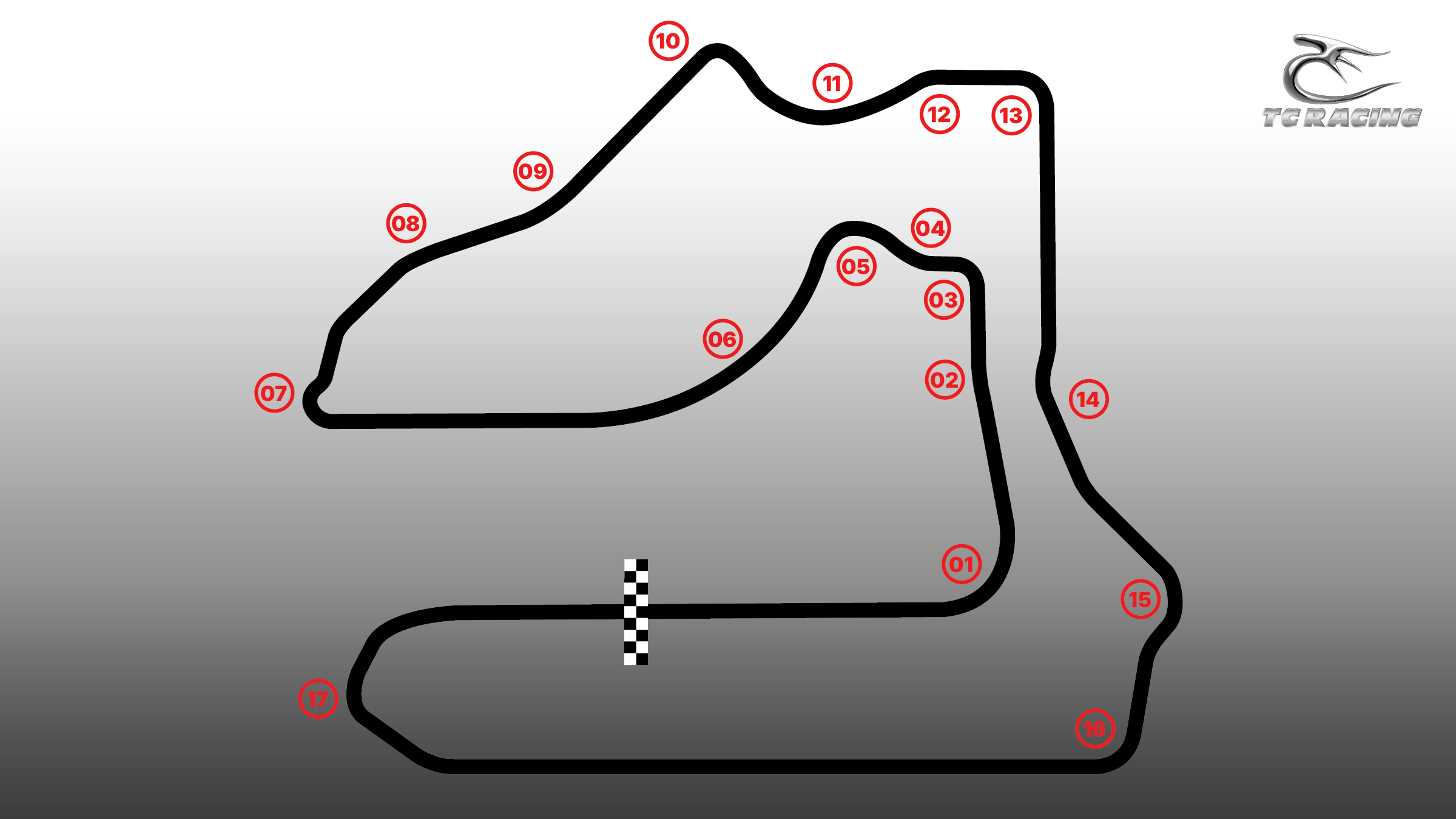
Track Layout and Design
Sebring’s layout is unlike most modern circuits. Instead of being built from scratch as a smooth, controlled racing environment, it incorporates large sections of the original concrete runways and taxiways from its military past.
Track Specifications:
- Length: 3.74 miles (6.02 km)
- Turns: 17
- Surface: Combination of concrete slabs and asphalt
This mix of surfaces creates a constantly changing rhythm. The concrete sections are notoriously rough, filled with seams that send vibrations through the chassis lap after lap.
Drivers often describe Sebring as one of the most physically demanding circuits in the world. It is not just about finding speed. It is about surviving the surface.
If a car can last here, it can last almost anywhere.
A Track Built on History (Literally)
What makes Sebring truly unique is its origin story. Built on a decommissioned airfield, the circuit retains much of its original character. Wide expanses of concrete, flat terrain, and long straightaways all reflect its aviation roots.
Unlike modern circuits designed with precision and uniformity, Sebring feels raw. The transition between asphalt and concrete is not subtle. It is abrupt and unforgiving.
Those concrete seams are more than just a visual detail. They challenge:
- Suspension durability
- Tire longevity
- Driver focus over extended periods
It is a place where engineering meets endurance.
The 12 Hours of Sebring: A True Endurance Test
At the heart of Sebring’s legacy is its flagship event, part of the IMSA® WeatherTech® SportsCar Championship.
Race Format:
- Duration: 12 continuous hours
- Distance Covered: Typically between 1,200 and 1,300 miles
- Start: Daytime
- Finish: Night
The transition from daylight to darkness is one of the defining elements of the race. Conditions evolve dramatically over the course of the event.
Drivers must adapt to:
- Rising and falling track temperatures
- Changing grip levels
- Reduced visibility at sunset
- Physical and mental fatigue
It is not simply a race of speed. It is a race of consistency and resilience.
Race Classes: Multiple Battles on One Track
One of the most compelling aspects of Sebring is its multi-class racing format. Several categories of cars compete simultaneously, each with its own championship battle.
Current IMSA Classes:
-
GTP (Grand Touring Prototype) The fastest cars on track, featuring hybrid technology and advanced aerodynamics from major manufacturers.
-
LMP2 (Le Mans Prototype 2) Slightly slower than GTP but still highly competitive and capable of remarkable speeds.
-
GTD Pro (Grand Touring Daytona Pro) Professional GT entries based on production vehicles like Ferrari®, Corvette, and Porsche®.
-
GTD (Grand Touring Daytona) Similar GT machinery, often featuring a mix of professional and amateur drivers.
This creates constant interaction across classes. Faster prototypes must carefully navigate through GT traffic, while GT drivers must maintain awareness without compromising their own race.
It is a continuous balancing act at high speed.
Unique Qualities That Define Sebring
1. The Surface
Sebring’s defining feature is its rough, uneven surface.
The concrete slabs generate constant vibration, affecting:
- Mechanical reliability
- Tire wear rates
- Driver comfort and endurance
Teams often develop specific setups just for this track. What works elsewhere may not survive here.
2. Day-to-Night Transition
Few races demand the level of adaptability seen at Sebring.
Over 12 hours, drivers face:
- Bright daylight conditions
- Glare during sunset
- Full night racing
Each phase introduces new challenges, requiring constant adjustment.
3. Airfield Layout
Because of its origins, Sebring offers:
- Wide runoff areas in some sections
- Minimal elevation changes
- Unique corner shapes not found on modern circuits
Corners such as Sunset Bend (Turn 17) are particularly challenging. Fast, bumpy, and unforgiving, it has ended many races within sight of the finish.
4. Mechanical Stress
Sebring is one of the toughest tracks on equipment.
Over the course of the race:
- Gearboxes endure repeated stress
- Suspension components absorb constant impact
- Braking systems are pushed to their limits
Simply finishing the race is considered an achievement.
How Long Does the Event Last?
While the main race runs for 12 hours, the full event spans multiple days.
Typical Event Schedule:
- Practice sessions leading into the weekend
- Qualifying rounds
- Support races from additional series
- The main 12-hour endurance race
Fans often arrive early and stay throughout, turning the event into a multi-day motorsport experience.
A Global Stage with Deep Roots
Sebring is one of the oldest continuously operating road racing circuits in North America. Its endurance race dates back to 1952 and has long been associated with international competition.
For decades, it has served as a proving ground for manufacturers and drivers alike. Success here carries weight.
Winning at Sebring is not just about speed. It is about proving durability under extreme conditions.
Why Sebring Still Matters Today
In an era dominated by modern facilities and refined track surfaces, Sebring remains unchanged in many ways.
It is still:
- Raw
- Demanding
- Unpredictable
For manufacturers, it is a testing ground. For drivers, it is a challenge that demands respect. For fans, it offers one of the most authentic experiences in motorsport.
The 12th Hour
Sebring International Raceway® is not about perfection. It is about persistence.
It is where:
- Machines are pushed beyond comfort
- Drivers are tested physically and mentally
- Teams prove their engineering under pressure
The 12 Hours of Sebring is more than a race. It is a high-speed marathon on a surface that fights back every lap.
And that is exactly why it remains one of the most respected events in racing.
Because if you can win at Sebring, you did not just go fast. You Endured.
IMSA® trademark is owned by International Motor Sports Association, LLC (LIMITED LIABILITY COMPANY; FLORIDA, USA); WeatherTech® trademark is owned by MacNeil IP, 1 MacNeil Court Bolingbrook ILLINOIS 60440; Ferrari® trademark is owned by Ferrari S.p.A. (JOINT STOCK COMPANY; ITALY); Porsche® trademark is owned by Dr. Ing. h.c.F. Porsche AG; Sebring International Raceway® trademark is owned by Sebring International Raceway, LLC. (LIMITED LIABILITY COMPANY; FLORIDA, USA). All trademarked names or other marks mentioned are for reference purposes only.