Long Beach Street Circuit: Precision, Pressure, and No Room for Error
When the Event Takes Place
The Long Beach race weekend traditionally lands in April, serving as an early-season highlight in the IMSA® WeatherTech® SportsCar Championship.
Typical Event Structure:
- Practice & Qualifying: Friday
- Main IMSA Race: Saturday
- Race Duration: Approximately 100 minutes
This compressed schedule changes the mindset entirely. Teams must arrive prepared, as there’s little room for experimentation once the weekend begins.
Track Layout and Key Details
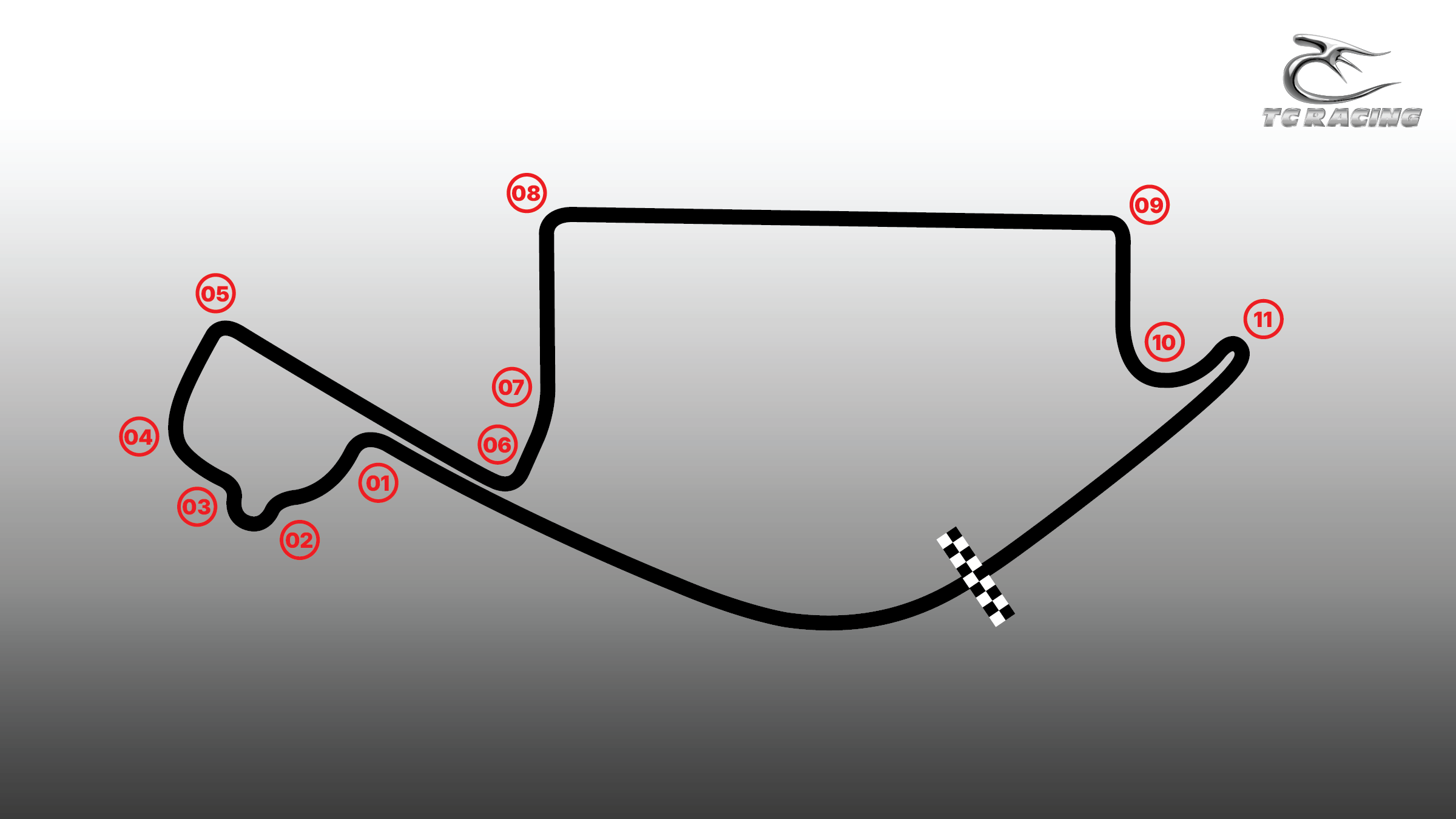
The Long Beach Street Circuit is carved out of real city streets, which means it carries all the unpredictability of an urban environment into a professional racing setting.
Track Specs:
- Length: 1.968 miles (3.167 km)
- Turns: 11
- Surface: Public asphalt streets
- Environment: Concrete barriers, temporary fencing, and narrow runoff areas
The course runs along Shoreline Drive, wraps around the Long Beach Convention Center, and blends high-speed sections with tight technical corners.
Notable Sections:
- Shoreline Drive Straight: The fastest portion of the circuit, where cars stretch their legs
- Turn 1: A heavy braking zone and one of the best overtaking opportunities
- Fountain Complex: A technical section that rewards precision and control
- Final Hairpin: Slow, tight, and crucial for setting up a run onto the main straight
This layout demands consistency. Miss your marks, and the consequences are immediate.
Race Classes at Long Beach
Unlike longer endurance rounds, Long Beach features a more focused grid, keeping the racing intense and easy to follow.
Primary Classes:
-
GTP (Grand Touring Prototype) The premier class featuring advanced hybrid prototypes from major manufacturers. These are the fastest and most technologically advanced cars on the circuit.
-
GTD (Grand Touring Daytona) Production-based GT cars from brands such as Porsche®, Ferrari®, and Lamborghini®. These entries often combine professional and amateur drivers.
With only two primary classes, the racing remains dynamic without becoming overcrowded. Faster prototypes navigate traffic while GT cars maintain their own battles, creating constant interaction across the field.
What Makes Long Beach Unique?
1. A Street Circuit at Its Core
Long Beach isn’t a purpose-built facility. It’s a functioning city transformed into a racetrack.
That reality brings distinct challenges:
- Concrete walls instead of forgiving runoff
- Tight racing lines with little margin
- Corners that limit visibility and reaction time
Drivers are not just racing competitors. They are racing the environment itself.
2. No Room for Error
On permanent circuits, running wide might cost a few tenths.
At Long Beach, it usually ends your race.
The walls are always within reach, forcing drivers to balance aggression with control. Every braking point and throttle input must be deliberate.
3. Sprint Format Intensity
At roughly 100 minutes, this is one of the shortest races on the IMSA calendar.
That condensed format shifts priorities:
- Strategy becomes immediate
- Pit stops carry more weight
- Track position becomes critical
There is no long-term recovery strategy. Every lap matters from the start.
4. Ever-Changing Urban Surface
Street circuits introduce variables that permanent tracks simply don’t have.
Drivers must contend with:
- Bumps and uneven pavement
- Painted lines that reduce grip
- Manhole covers and patched asphalt
- Low grip conditions early in the weekend
As the race progresses, rubber builds up and grip improves. Still, the surface never becomes entirely predictable.
5. Passing Requires Precision
Overtaking at Long Beach is possible, but it demands commitment and timing.
Key passing zones include:
- Turn 1 under heavy braking
- The hairpin exit leading onto Shoreline Drive
Outside of these areas, drivers often rely on pressure to force errors rather than executing clean passes.
Strategy: Track Position Is Everything
Because of the circuit’s narrow layout, qualifying plays a significant role in race outcomes.
Starting near the front offers:
- Clearer air
- Reduced traffic
- Greater control over pace
Drivers starting deeper in the field often face a different race entirely, battling congestion rather than chasing lap times.
Pit strategy also becomes a decisive factor. With limited race time, a well-timed stop can dramatically alter track position.
A Fan-Centered Racing Experience
One of Long Beach’s defining features is its accessibility.
Spectators are positioned close to the action, often within feet of the cars as they navigate the circuit. The event blends motorsport with the energy of a city festival, combining racing with entertainment, food, and a coastal atmosphere.
It’s not just about competition. It’s about experience.
How It Compares to Other IMSA Races
Compared to endurance events like 12 Hours of Sebring:
- Shorter duration (100 minutes versus 12 hours)
- Fewer classes on track
- Higher intensity per lap
Compared to permanent circuits like Road America:
- Narrower layout
- Less forgiving conditions
- Greater emphasis on precision driving
Long Beach shifts the focus from endurance to execution.
Intensity Rules
The Long Beach Street Circuit represents a different kind of challenge within IMSA racing.
It is tight, technical, and unforgiving. A place where:
- Every corner carries consequence
- Every mistake is amplified
- Every second matters
Drivers are not just competing against each other. They are managing the track, the surface, and the constant proximity of the walls.
And when everything aligns, when a driver hits every braking point and threads every corner with precision, it becomes one of the most satisfying performances in motorsport.
Because at Long Beach, speed alone is not enough.
You have to control it.
IMSA® trademark is owned by International Motor Sports Association, LLC (LIMITED LIABILITY COMPANY; FLORIDA, USA); WeatherTech® trademark is owned by MacNeil IP, 1 MacNeil Court Bolingbrook ILLINOIS 60440; Porsche® trademark is owned by Dr. Ing. h.c.F. Porsche AG; Ferrari® trademark is owned by Ferrari S.p.A. (JOINT STOCK COMPANY; ITALY); Lamborghini® trademark is owned by AUTOMOBILI LAMBORGHINI S.P.A. (CORPORATION; ITALY). All trademarked names or other marks mentioned are for reference purposes only.