The HANS Device: Racing’s Quiet Lifesaver
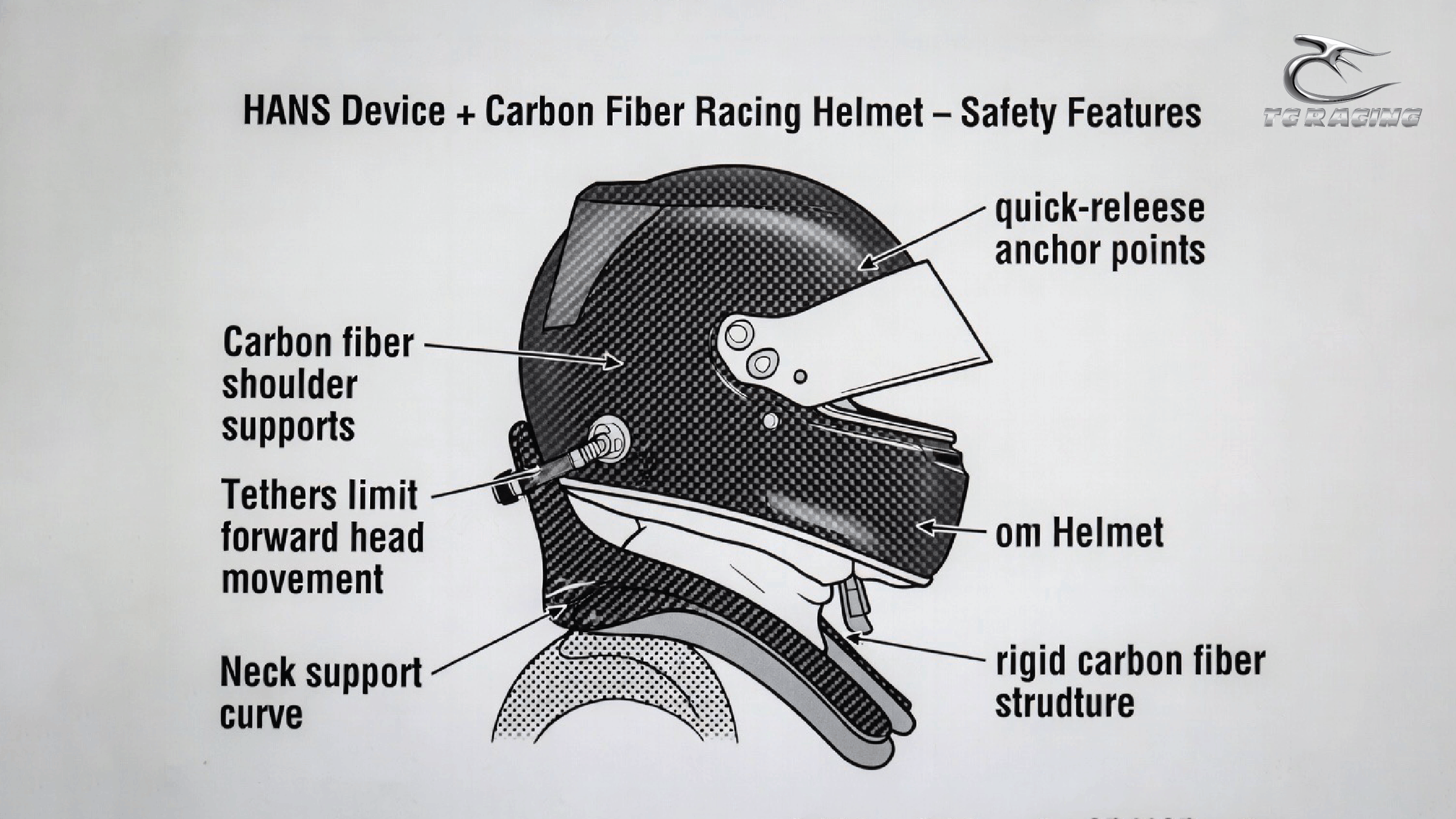
How It Protects Drivers (The Physics Without the Headache)
Here’s where it gets interesting.
In a high-speed crash, the car stops. Your body stops. But your head keeps moving forward due to inertia. That violent motion can cause a basilar skull fracture, one of the most dangerous injuries in racing history.
The HANS device changes the game by:
- Restraining forward head movement using tethers
- Keeping the head aligned with the spine
- Transferring crash forces from the neck into the torso, which can handle it better
In simple terms, it spreads the load. Instead of your neck taking all the force, your shoulders and chest help out. Teamwork makes the dream work, even in a crash.
When Did It Become Mandatory?
Like a lot of safety innovations, the HANS device didn’t become popular overnight. In fact, drivers initially hated it. Too bulky, too restrictive, felt like wearing a coat hanger around your shoulders.
But then reality stepped in.
Key Milestones:
- 1996 – Adopted in NHRA after a fatal crash
- 2001 – Mandatory in NASCAR®’s top series after multiple fatalities, including Dale Earnhardt
- 2001–2002 – CART mandates it, first on ovals, then all tracks
- 2003 – Mandatory in Formula One® and FIA-sanctioned series
- 2005 onward – Required across most major racing series globally
- 2009 – FIA mandates head and neck restraints in all international-level events
So yeah, it took a while. Racing tends to learn safety lessons the hard way.
What Racing Circuits and Series Require It?
Today, if you’re racing anything serious, you’re wearing a HANS device or an approved equivalent. No exceptions, no debates.
Major Series That Require HANS (or FIA-approved FHR devices):
- Formula One under the Fédération Internationale de l'Automobile
- World Endurance Championship (WEC)
- World Rally Championship (WRC)
- IndyCar® Series
- NASCAR
- IMSA® SportsCar Championship
- NHRA Drag Racing
- DTM and GT racing series
- Most amateur and club racing organizations
Even at grassroots levels, it’s become as standard as a helmet or fire suit.
Why It Took So Long (Because Racers Are… Racers)
Let’s be honest. Racing drivers are wired a little differently.
They’ll drive through smoke, sparks, and chaos, and still ask if the car can finish the lap. So when the HANS device showed up, many pushed back.
Complaints included:
- Limited head movement
- Discomfort
- Concerns about visibility
Some drivers resisted hard. But after a series of tragic incidents in the early 2000s, attitudes changed quickly. What was once “optional” became essential almost overnight.
Real-World Impact: Saving Lives
Here’s the part that matters.
Before the HANS device, basilar skull fractures were one of the leading causes of death in motorsports. After widespread adoption, those fatalities dropped significantly.
Drivers have walked away from crashes that, years earlier, would have been fatal.
- High-speed impacts
- Head-on collisions
- Sudden deceleration events
The HANS device doesn’t prevent crashes. It makes them survivable.
The Evolution of the Design
Early versions were bulky and awkward. Over time, engineers refined everything:
- Lighter carbon fiber construction
- More flexible tether systems
- Adjustable fit for different seating angles
Modern designs are so well integrated that most drivers barely notice them. It’s just another step in the pre-race routine, like tightening your belts or checking your mirrors.
Final Lap
If you’re looking at racing safety like a car guy, think of the HANS device as the moment racing grew up a little.
It’s not flashy. It won’t get you on the podium. But it might get you home.
And in racing, that’s the win that actually counts.
NASCAR® trademark is owned by National Association for Stock Car Auto Racing, Inc. (CORPORATION; FLORIDA, USA); Formula One® trademark is owned by Formula One Licensing B.V. (BESLOTEN VENNOOTSCHAP (B.V.); NETHERLANDS); Indycar® trademark is owned by BRICKYARD TRADEMARKS, INC. (CORPORATION; NEVADA, USA); IMSA® trademark is owned by International Motor Sports Association, LLC (LIMITED LIABILITY COMPANY; FLORIDA, USA). All trademarked names or other marks mentioned are for reference purposes only.