Downforce, Drafting, and the Art of Air: GTD Pro & GTD Explained
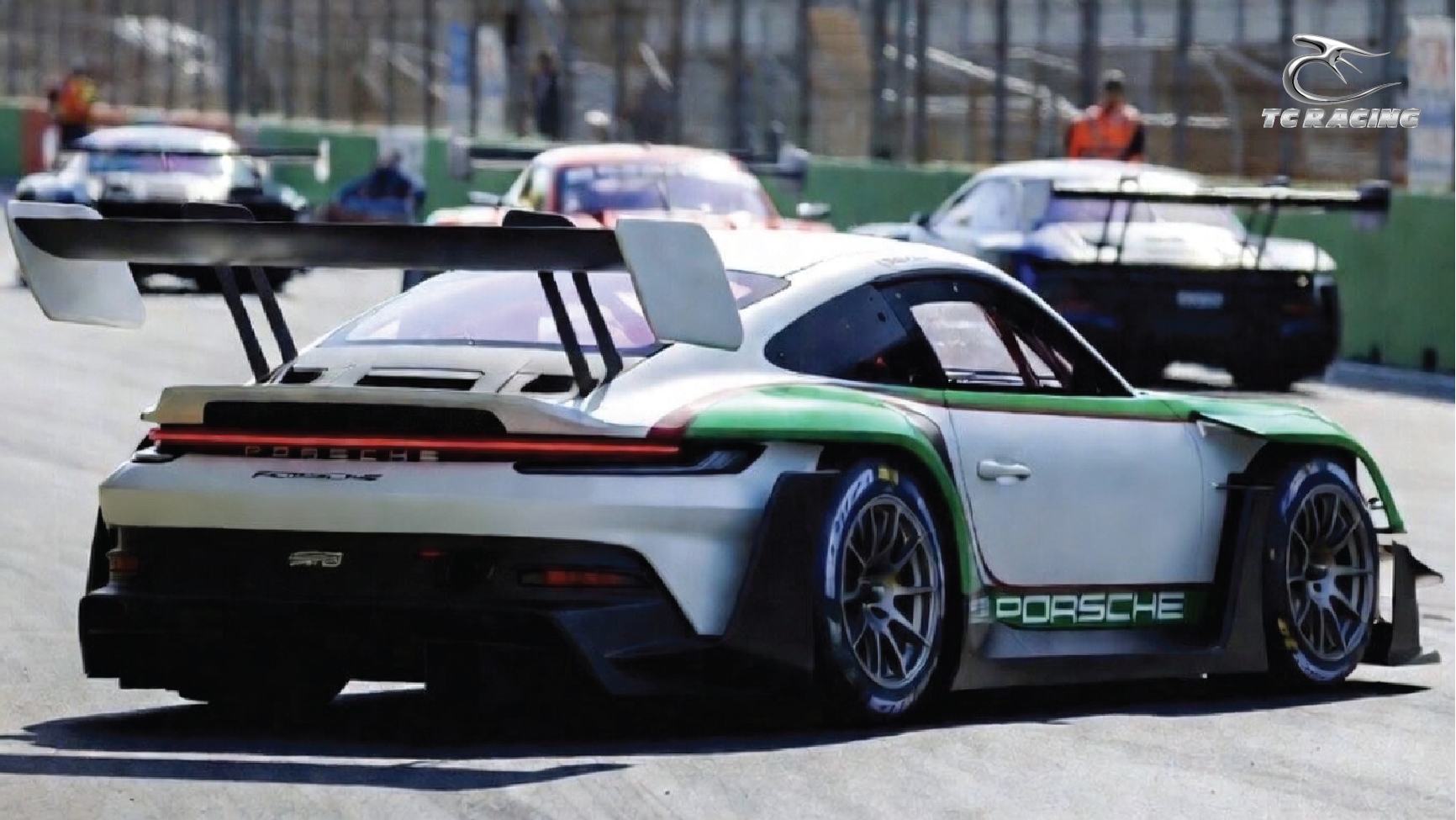
The Rear Wing: Not Just for Show
You ever notice how race cars don’t just move through air… they work with it? Not in a polite way, either. More like a constant negotiation happening at triple-digit speeds. And right at the center of that negotiation is the rear wing.
That big piece hanging off the back of a GTD Pro car isn’t there for looks. It’s there to push the car into the track.
That’s downforce.
Air flows over the wing, gets redirected upward, and physics pushes the car downward. Simple idea. Complicated execution.
What that gives you:
- Stability when braking hard
- Grip when cornering fast
- Confidence when the car is right on the edge
But nothing in racing comes free. More downforce means more drag. And more drag means less straight-line speed.
So now you’ve got a balancing act.
Too much wing, you’re slow on the straights. Too little, and the car feels like it’s skating across the surface. Somewhere in between is the sweet spot, and teams spend entire weekends chasing it.
GTD Pro vs GTD: Same Cars, Different Conversations
Both GTD Pro and GTD classes run GT3®-based machines. Same aerodynamic packages, same core design philosophy. But how they’re used? That’s where things start to separate.
GTD Pro:
- All professional drivers
- Aggressive setups
- Willingness to sacrifice stability for speed
GTD:
- Mixed driver lineups
- More forgiving setups
- Focus on consistency over raw pace
So a GTD Pro car might run less rear wing to gain speed on the straight, trusting the driver to handle a looser rear end. A GTD entry might add a little more downforce, making the car predictable across a long stint.
Same tools. Different approach.
The Full Aerodynamic Orchestra
The rear wing gets the spotlight, but it’s part of a much bigger system.
Front Splitter
That sharp edge at the front isn’t just cutting through air. It’s dividing it. High pressure above, low pressure below. That difference presses the front tires into the track.
Underbody and Diffuser
Under the car, air speeds up. Faster air means lower pressure. The diffuser at the back helps expand and smooth that airflow, pulling the car downward.
It’s like the car is being vacuumed onto the track.
Side Skirts
They keep that low-pressure zone intact, preventing outside air from sneaking in and messing things up.
Put it all together, and the car isn’t just driving. It’s being held down by invisible forces working in harmony.
Track Characteristics Shape Everything
Not every track treats aerodynamics the same way.
High-Speed Circuits
Long straights. Fast sweepers.
- Lower wing angles
- Reduced drag
- Maximum top speed
Technical Tracks
Tight corners. Short bursts.
- Higher downforce
- More wing angle
- Focus on grip
Mixed Layouts
Most tracks land somewhere in the middle, forcing teams to compromise.
Then you add:
- Elevation changes
- Surface grip variations
- Temperature shifts
Now that rear wing adjustment becomes a conversation, not a decision.
Drafting: Borrowing Speed From Thin Air
Here’s where things get interesting.
When a car punches through the air, it leaves behind a wake. That wake is messy, turbulent, and lower in pressure. But if you tuck another car right behind it, something changes.
Less resistance.
That trailing car suddenly:
- Gains speed
- Uses less energy
- Feels like it got a free push
That’s drafting.
The Slingshot Move
A driver sits in the draft, building momentum. Then at the right moment, pulls out of the slipstream and uses that extra speed to overtake.
It’s quick. It’s precise. And when it works, it looks effortless.
But there’s a catch.
Stay too close for too long, and your own aerodynamics stop working properly. The air hitting your car is no longer clean.
Dirty Air: The Trade-Off
Drafting gives you speed on the straight, but it can take away grip in the corners.
That’s dirty air.
When airflow is disrupted:
- Downforce drops
- Grip fades
- The car becomes unstable
Drivers feel it immediately. The front end gets light. The rear starts to move.
So they adjust:
- Back off slightly before a corner
- Regain clean air
- Close back in on exit
It’s not just racing. It’s timing.
Weather and Environment: The Invisible Variables
Air changes depending on conditions.
Temperature
Hot air is thinner:
- Less downforce
- Less drag
Cold air is denser:
- More grip
- More resistance
Altitude
Higher elevation:
- Reduced aero effectiveness
- Lower engine output
Wind
Crosswinds can unsettle a car mid-corner. Headwinds and tailwinds shift braking points and acceleration zones.
Teams monitor all of it. Constantly.
The Driver’s Role in the Equation
You can design the perfect aerodynamic package, but it still comes down to the driver.
They feel:
- When the rear wing isn’t giving enough stability
- When the front splitter isn’t biting
- When dirty air is affecting grip
And they adapt in real time.
No sensors needed. Just instinct.
Strategy in Motion
Aerodynamics isn’t just about speed. It’s about survival over a race distance.
Teams use:
- Drafting to conserve fuel
- Aero balance to protect tires
- Setup adjustments to match evolving conditions
In endurance racing, small advantages become big ones over time.
Engineering Balance
In GTD Pro and GTD racing, air is not an obstacle. It’s a tool.
Downforce presses the car into the track. Drag holds it back. Drafting gives it a push. And drivers sit right in the middle, managing all of it in real time.
It’s a constant negotiation. Between speed and control. Between engineering and instinct.
And when everything lines up, when the car hooks into a corner just right or slingshots out of a draft at the perfect moment, you realize something.
The fastest cars aren’t just powerful. They’re balanced and that balance is written in the air.
GT3® trademark is owned by Dr. Ing. h.c.F. Porsche AG. All trademarked names or other marks mentioned are for reference purposes only.